
IGNITE
Editorial
Print
Art direction
AWARDS
2026 RGD Student Awards
Award for Editorial and Honourable Mention
2026 Student Awards Applied Arts
Editorial Design Cover/Spread & Social Responsibility
2026 GBP School Of Design YES! Awards
Corporate Thesis: Outstanding Project



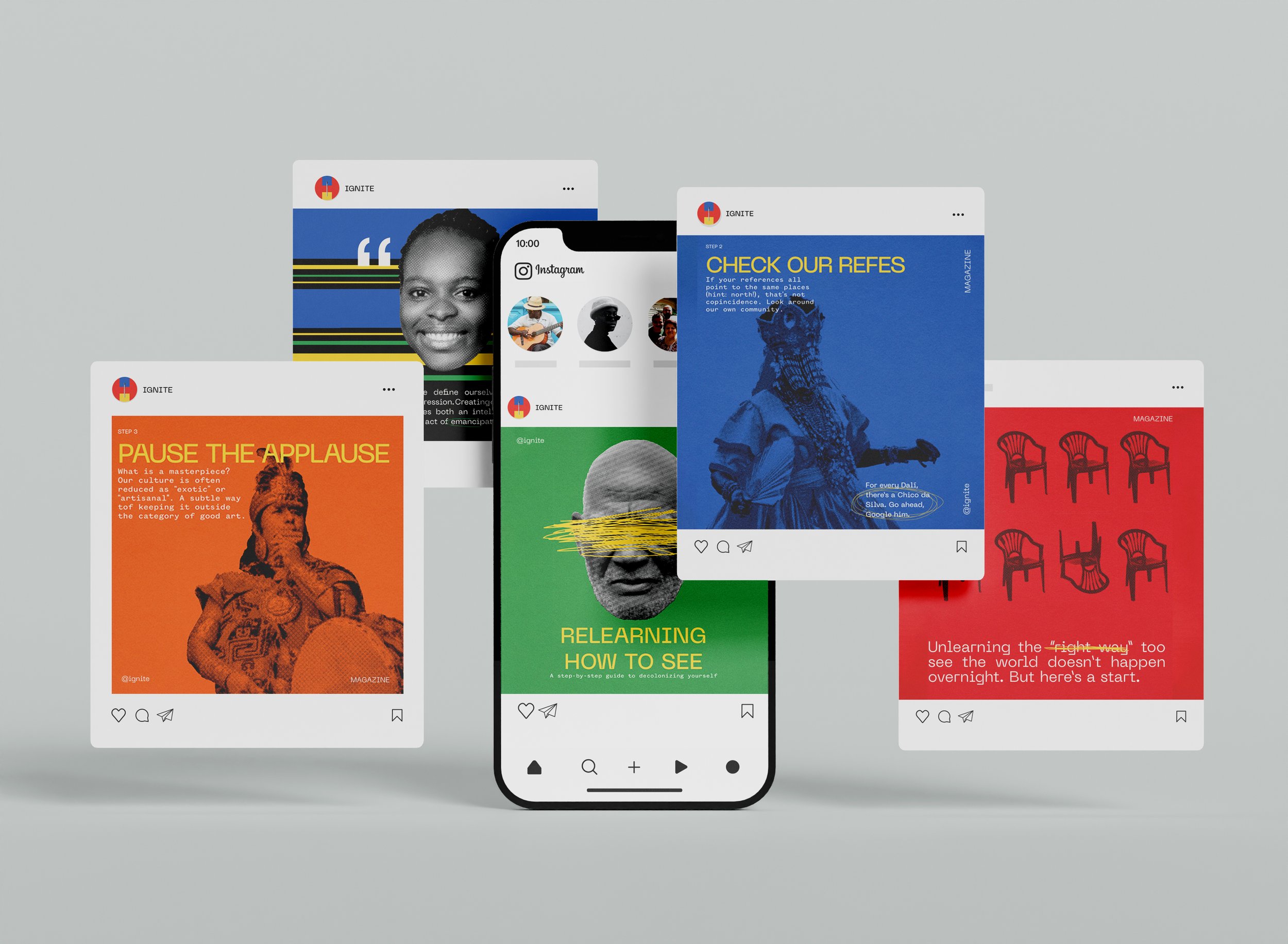
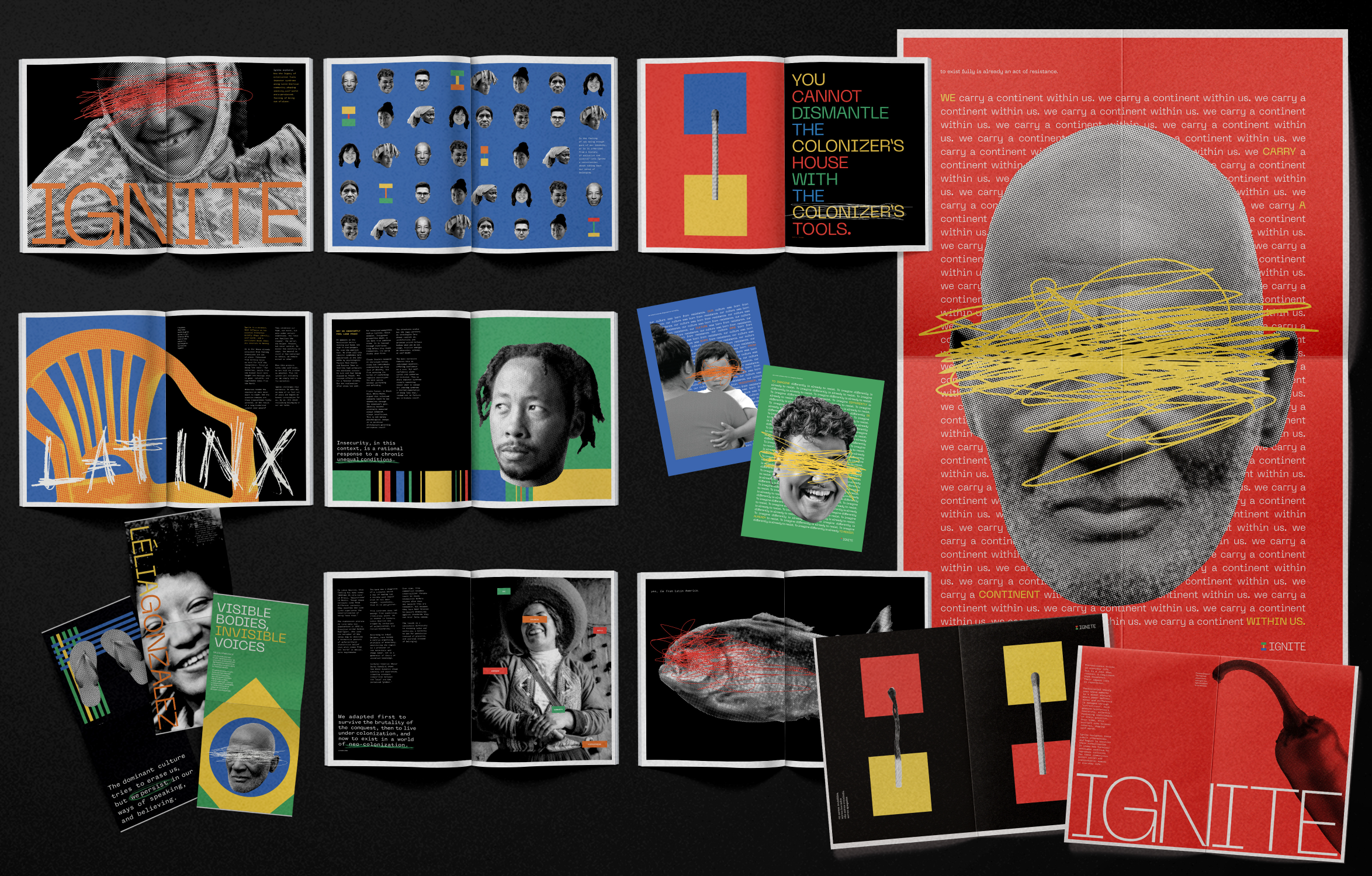
IGNITE explores how colonial legacy manifests as imposter syndrome within Latin American identities. Rooted in my experience as a Latina living abroad, the project reflects the tension of existing between cultures. The inaugural issue focuses on understanding imposter syndrome while offering decolonial perspectives on the world. Through editorial design, I use typography, layout, and visual storytelling to make the invisible visible. The project comprises a magazine, a booklet, and a poster series, aiming to spark dialogue and reclaim space, voice, and self-worth.
Thesis // 2026
the magazine
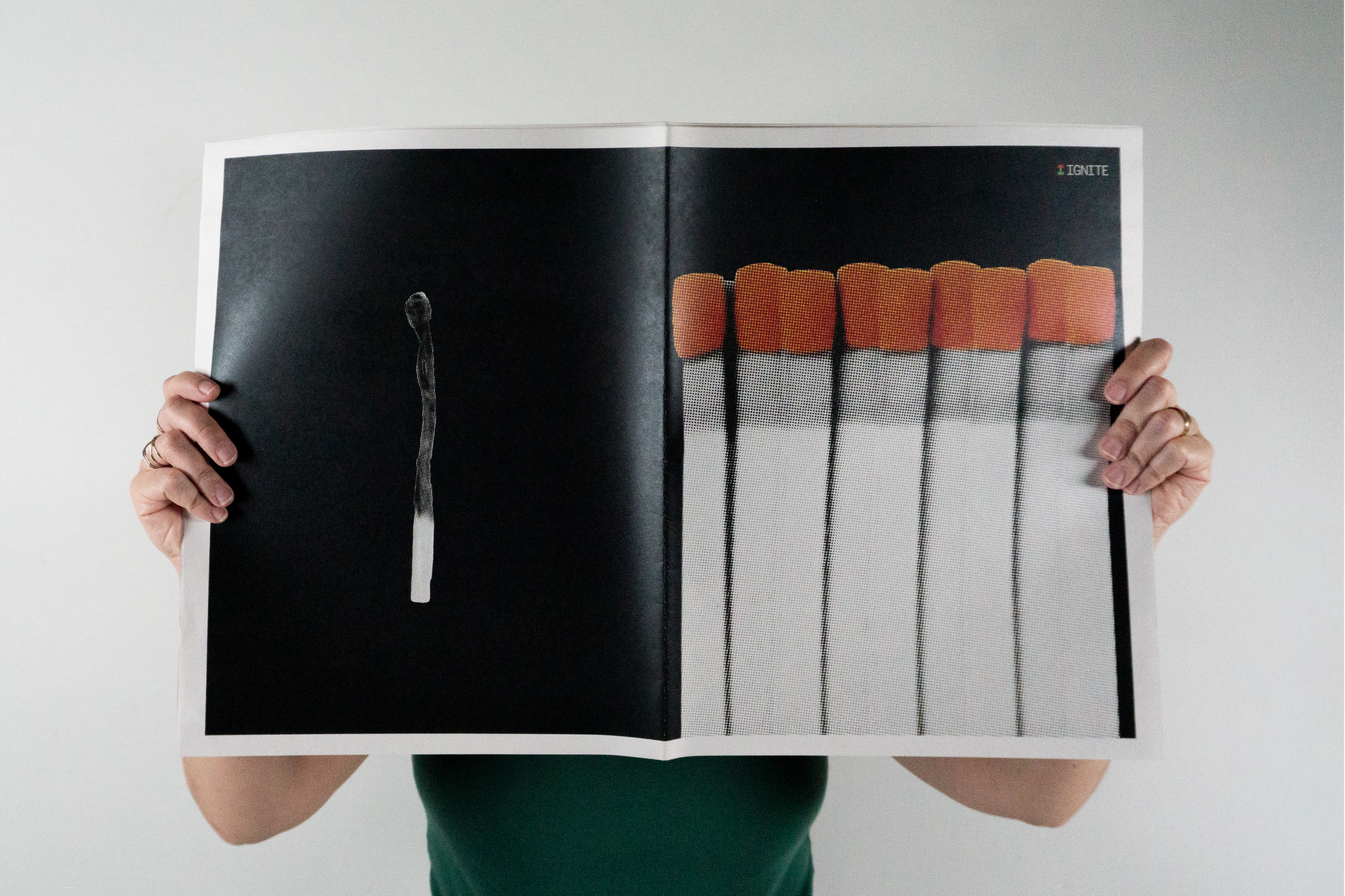
photo by Ingrid Nazzari
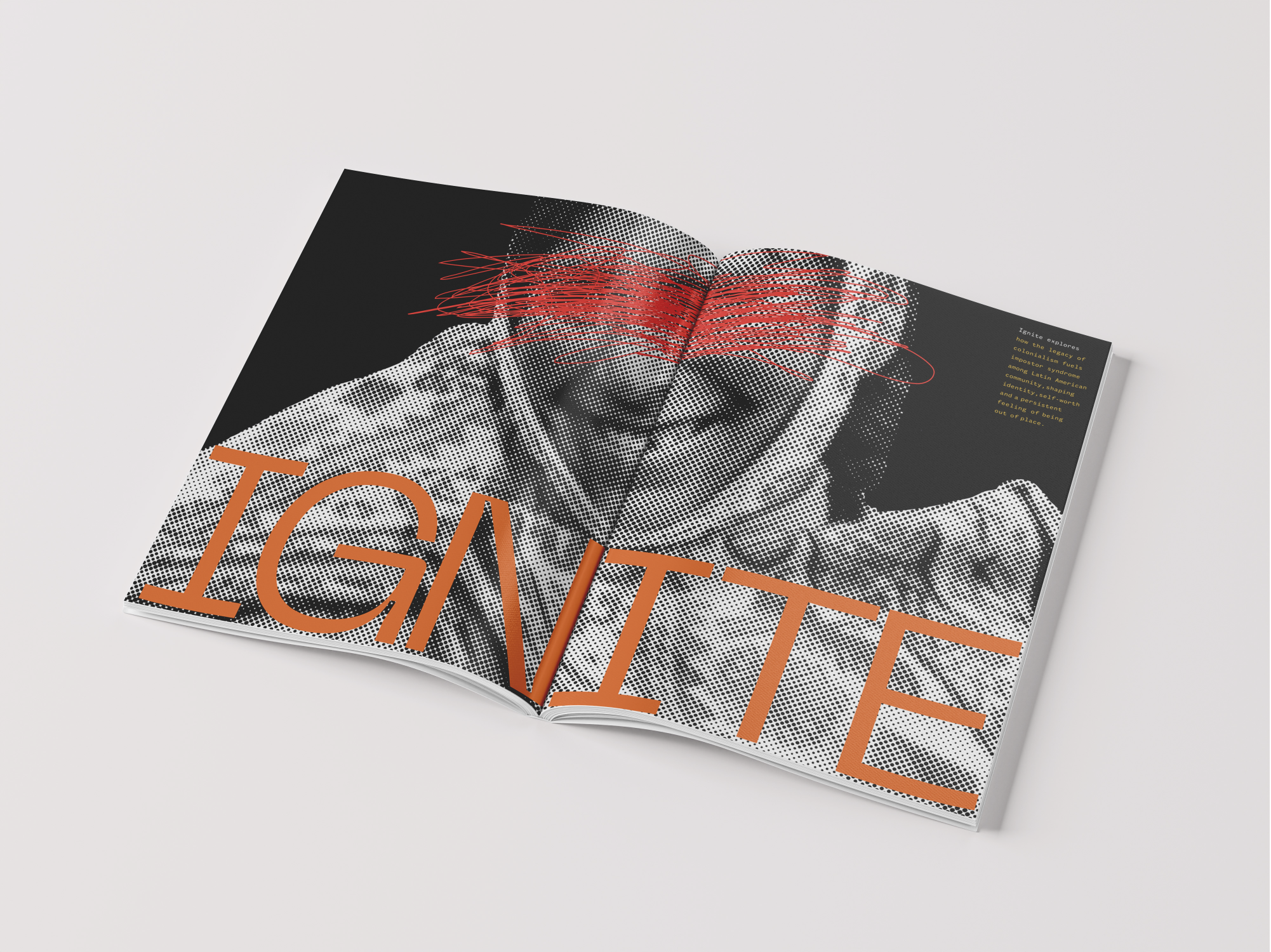
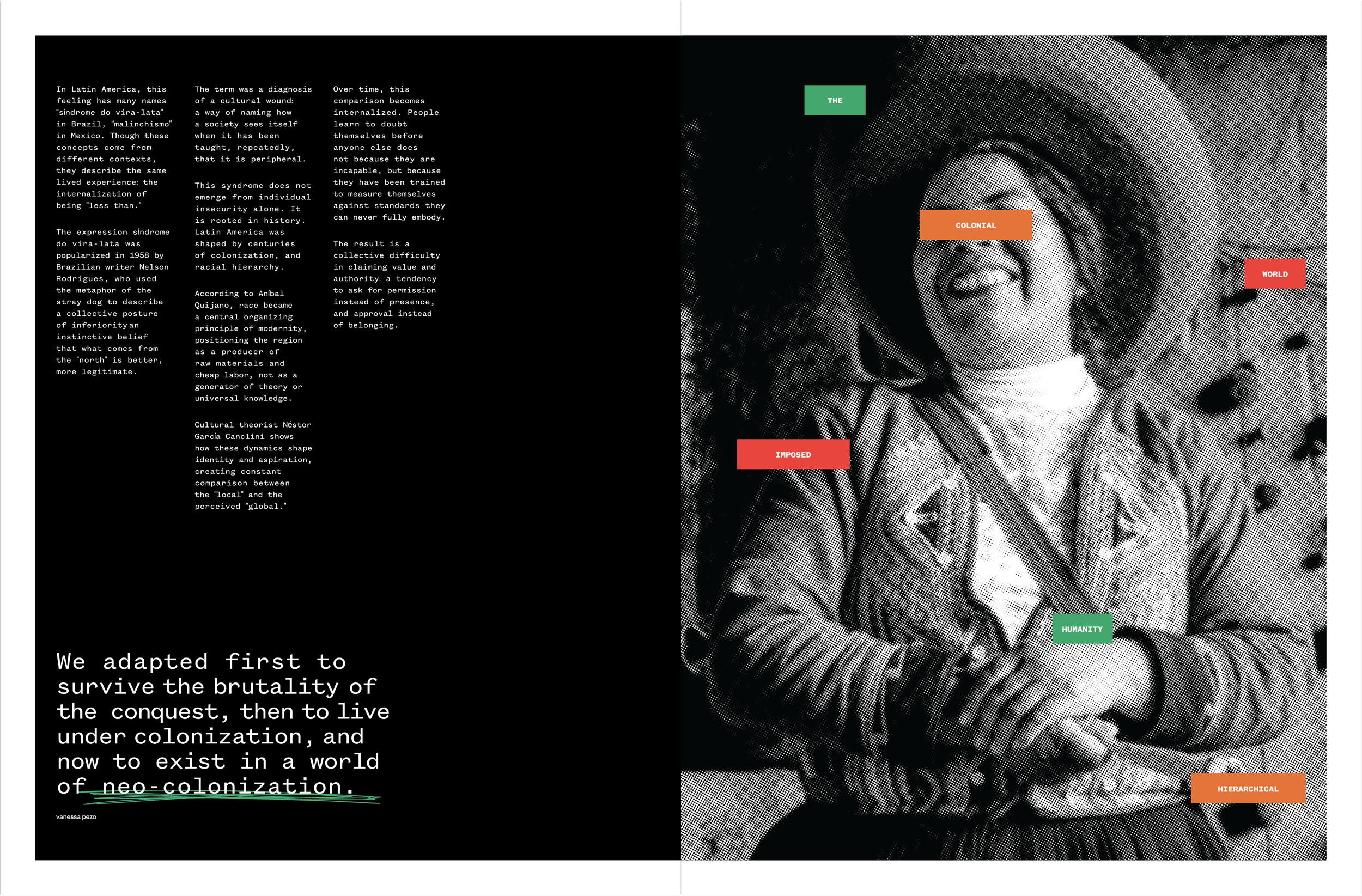
Producing a magazine on this topic wasn't on my mind from the very beginning, but the project ended up becoming deeply tied to my own journey and to the journeys of so many other Latinos living abroad. I have always been interested in editorial design, and I still believe that physical publications have a unique power to shift people's perspectives. There is still something magical about holding a publication in your hands and flipping through the pages. That is why I wanted to give myself the chance to create an editorial project for my thesis. Discussing colonialism and imposter syndrome within the Latino community made perfect sense to me. It allowed me to explore each case through individual articles, looking at how these stories were lost and how they have been recovered.
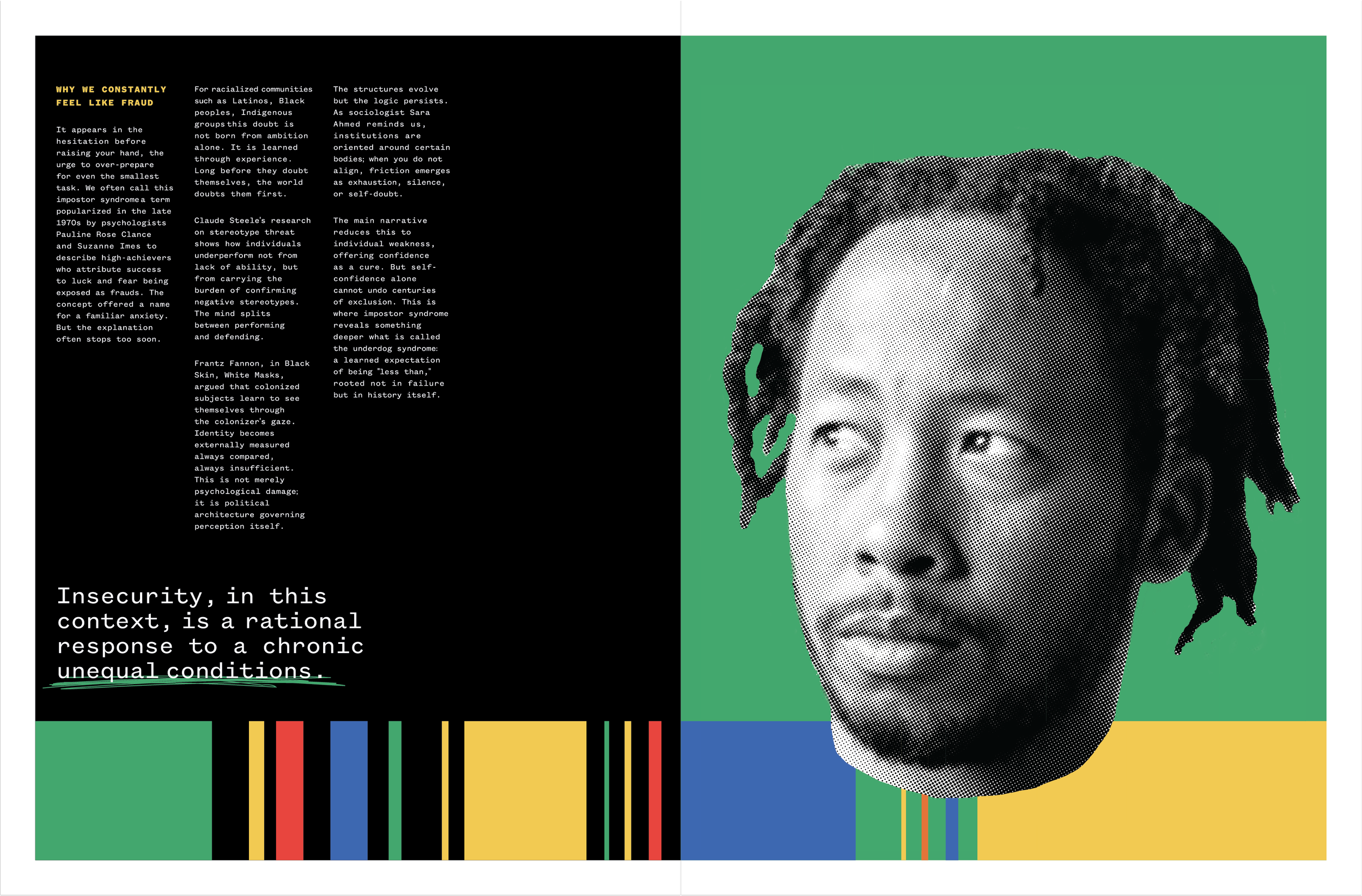
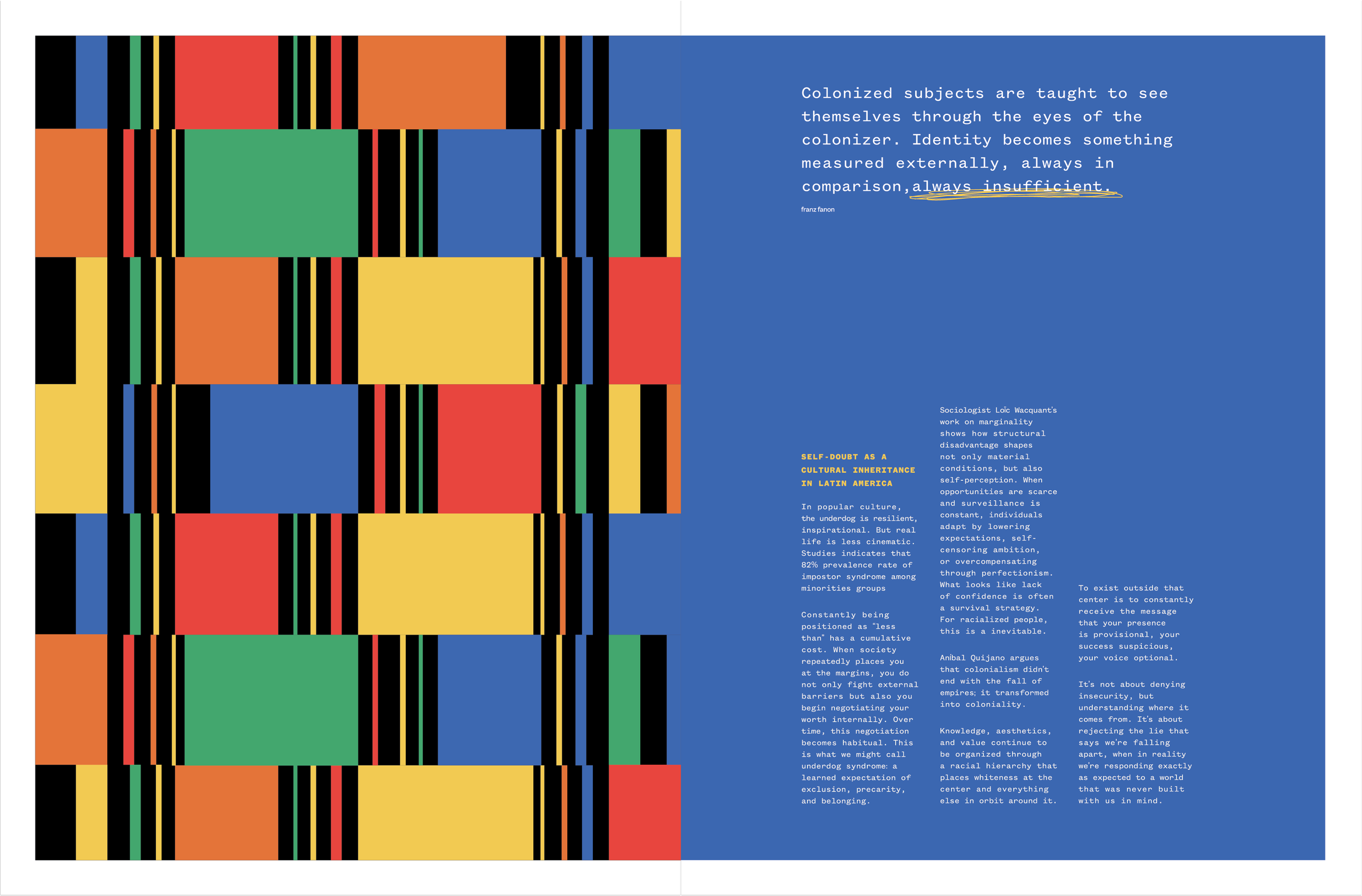
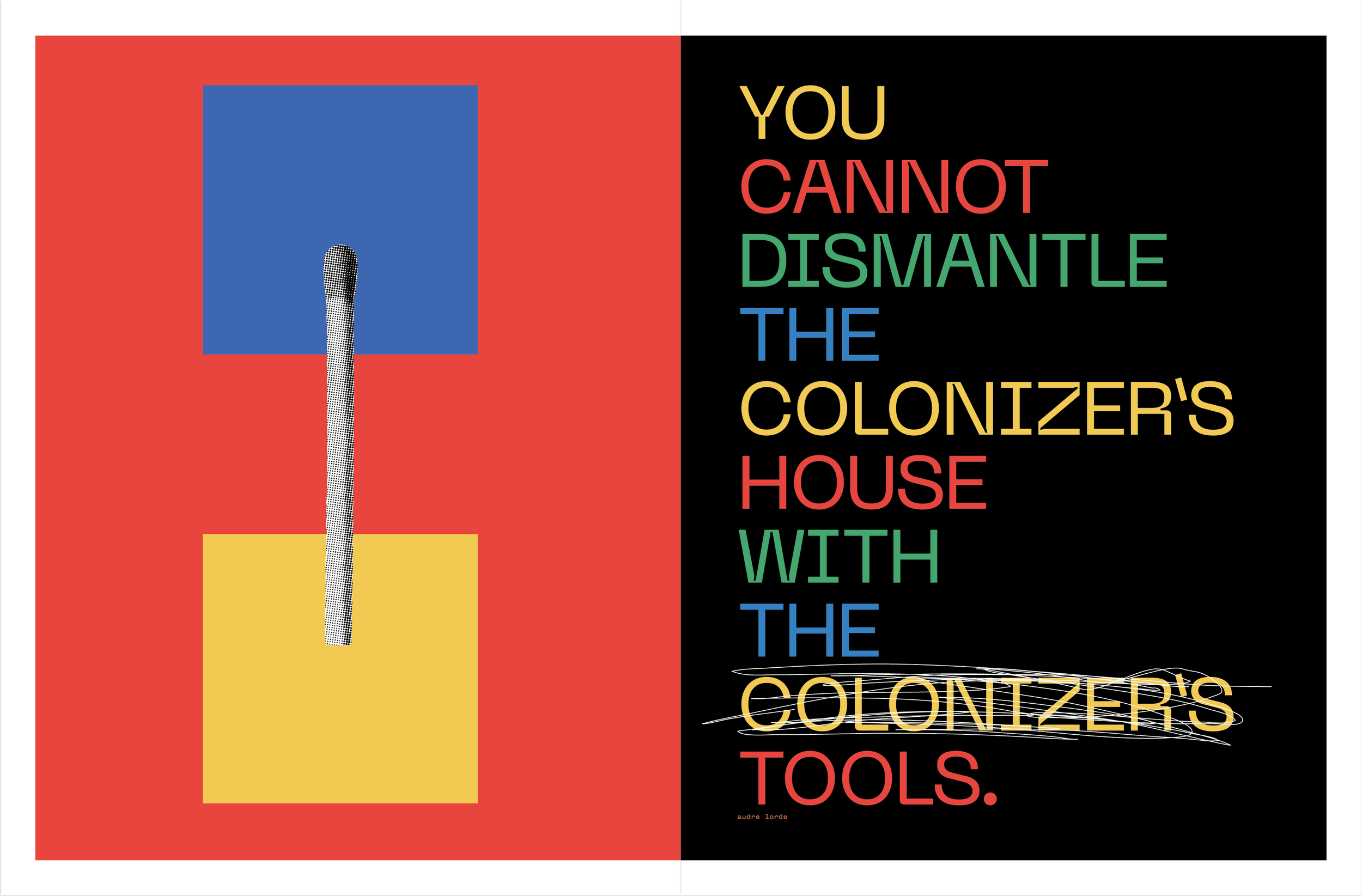
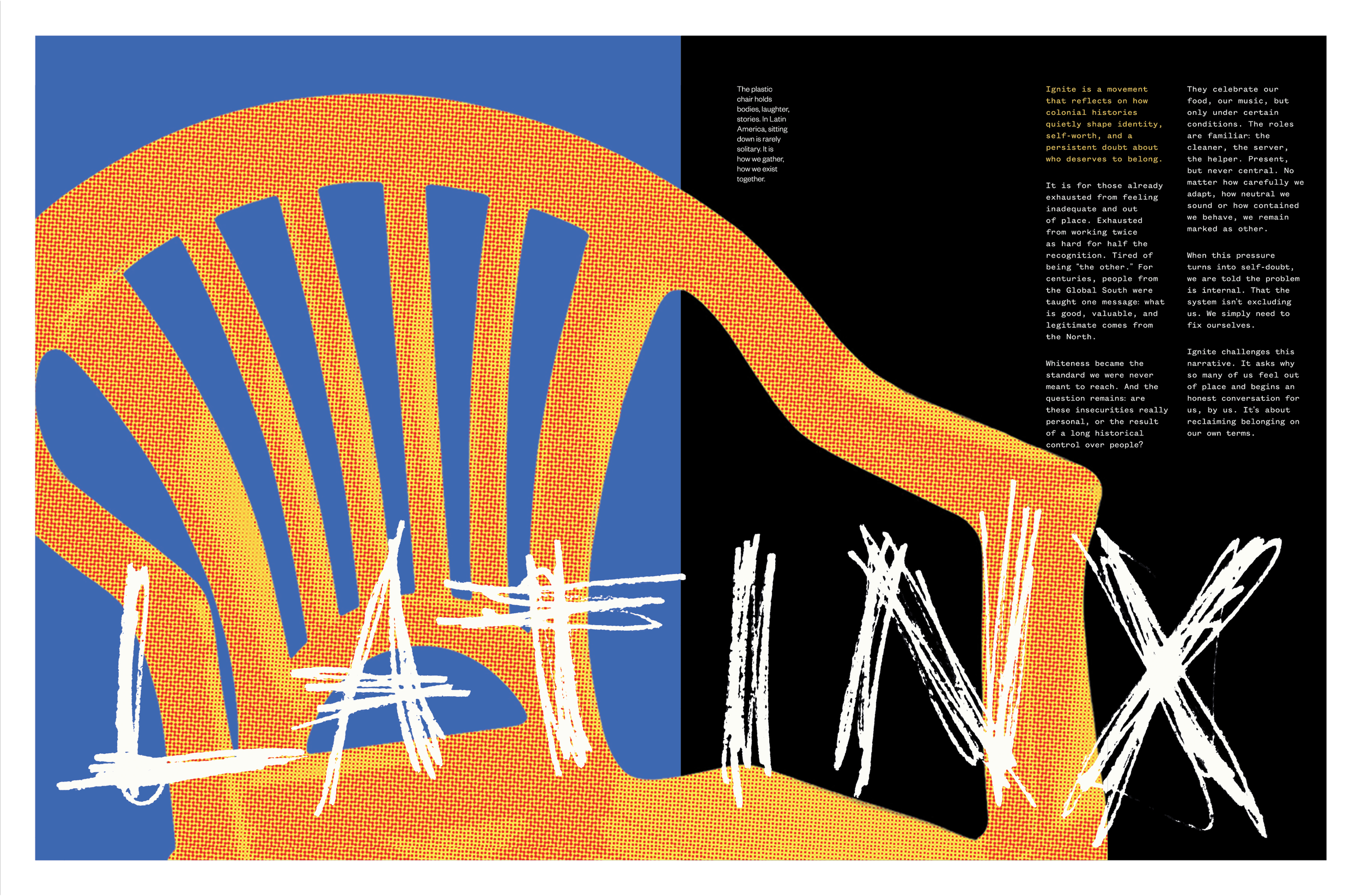
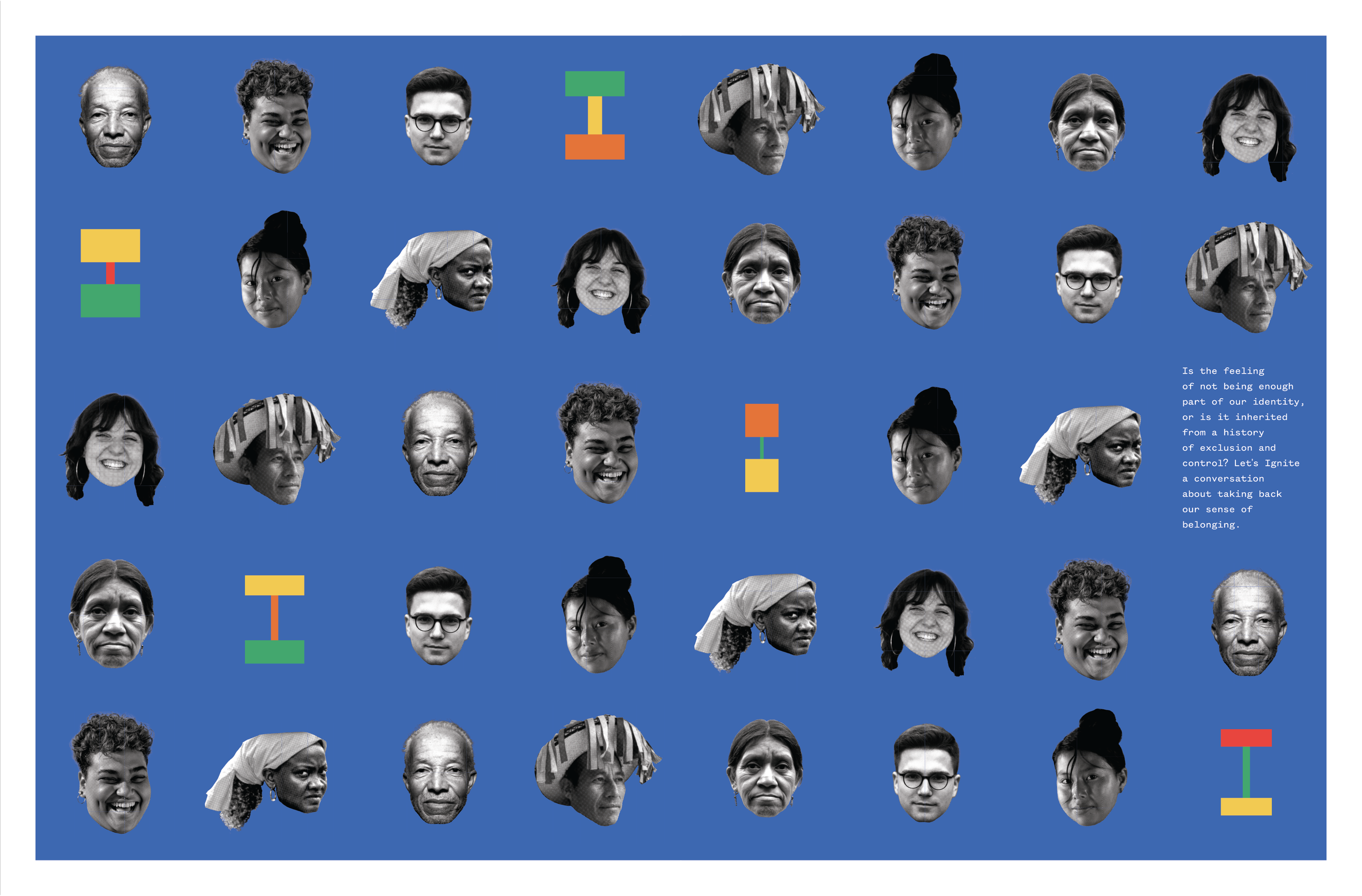
The magazine is not divided into traditional chapters. Instead, it is structured around statements that confront the reader with the harmful reality of a history built on exploitation and exclusion. After that comes a the "IGNITE," which reclaims space for Latino people. The magazine focuses on why we feel like impostors by gathering information on what imposter syndrome actually is. It also traces that feeling of self doubt to something inherited from the history of oppression and violence that Latino people have lived through. Finally, there is a section on how to decolonize the way we see ourselves, offering different paths centered on the needs of our community rather than on false white standards.
Alongside the information and the statements, the magazine also includes things we hear as Latinos every single day. These are things that feel like a constant struggle, reminding us that we are less, that we are the other, and that we will never be part of what is considered good.
This magazine is the first step in starting an honest conversation about feeling like an impostor, not from an individualistic angle, but as a collective action that needs to be addressed and understood at its root. It is not about simply being more confident. It is about understanding that this lack of confidence is a reaction to a world that never truly included us as part of it.
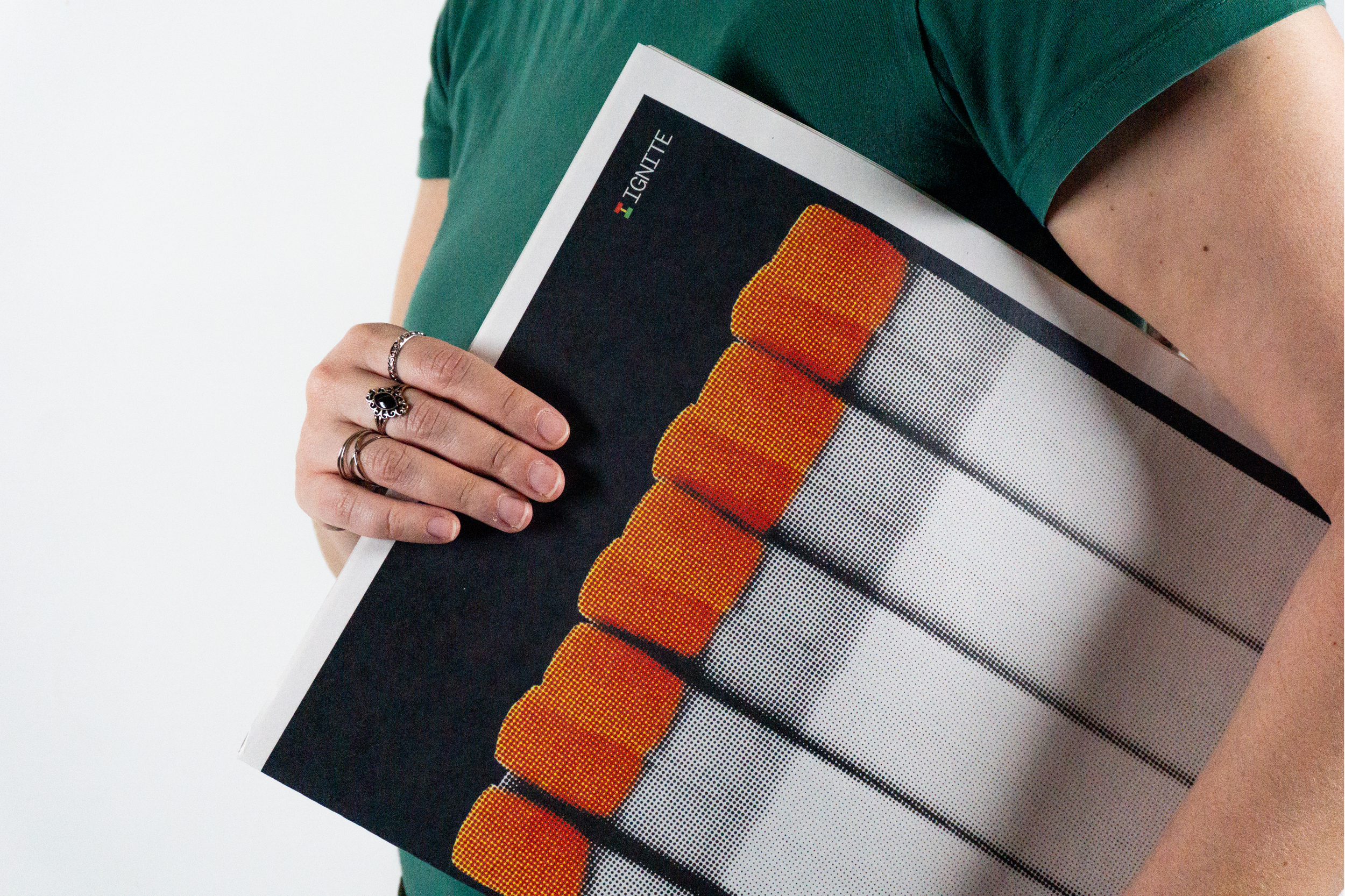
The magazine measures 28.9 x 38 cm and is printed on newspaper stock. This decision was inspired by a desire to reference the past, when big and important news circulated on these very pages, while also adding a tactile quality through the unique texture of the paper.
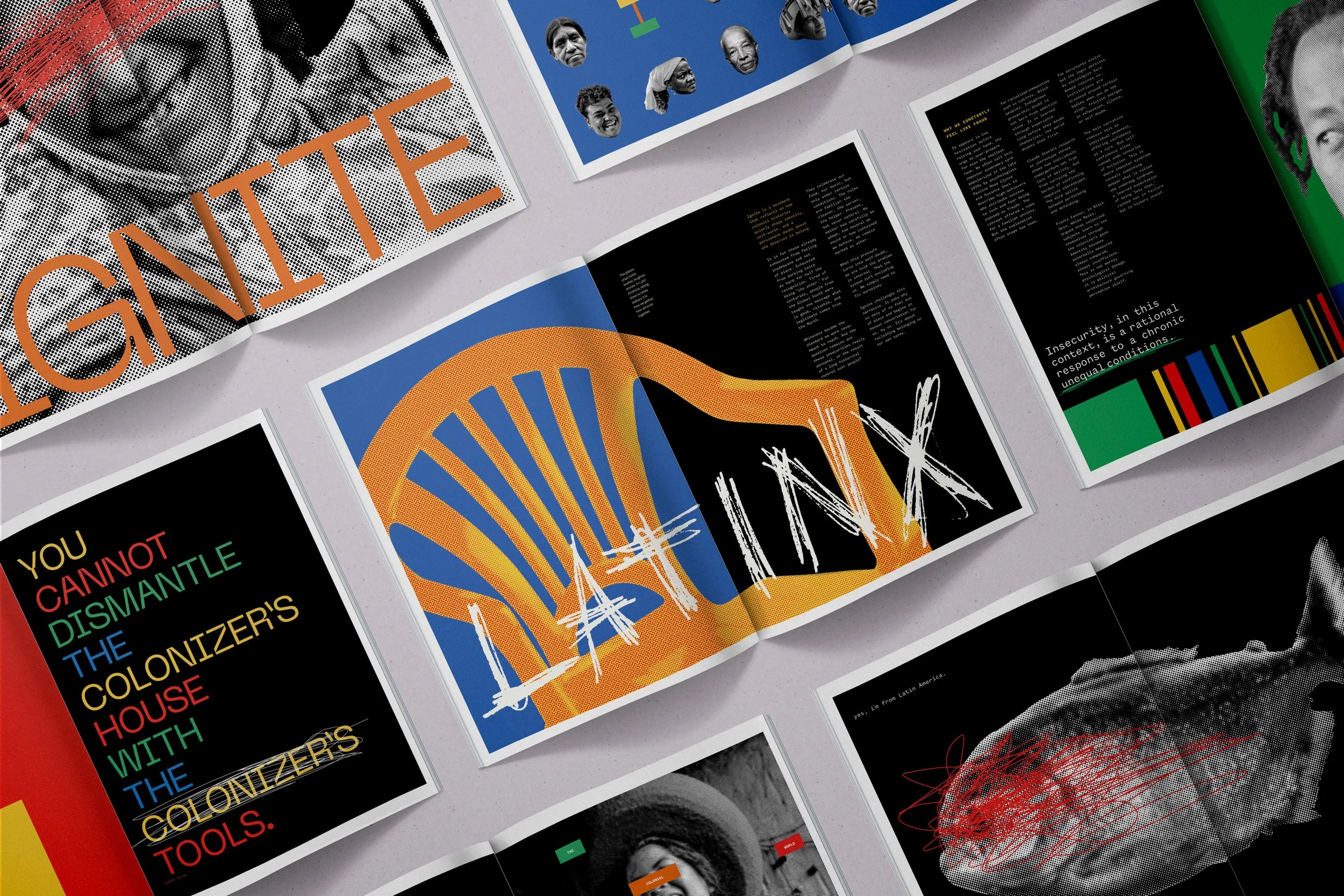
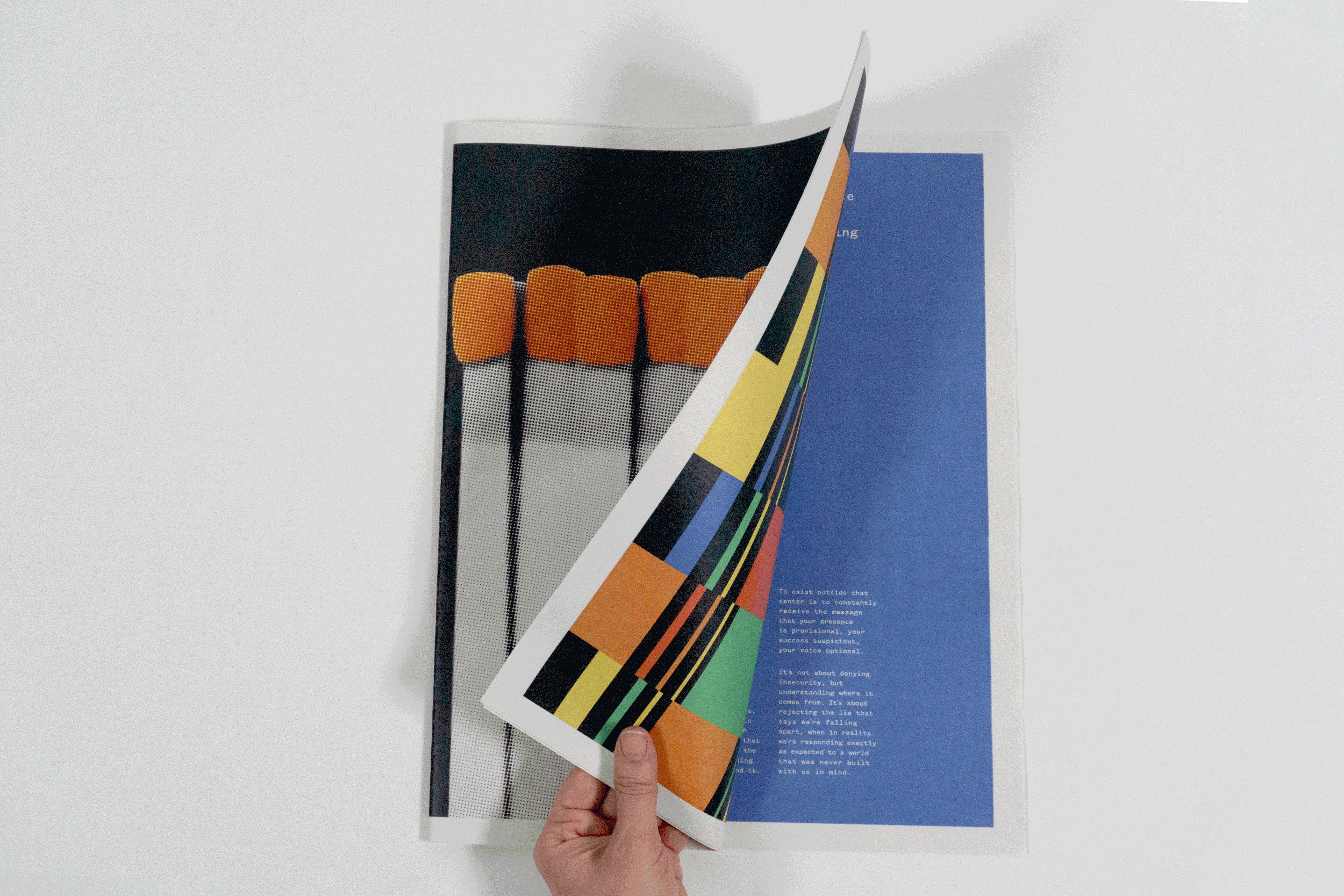
photo by Ingrid Nazzari
the booklet
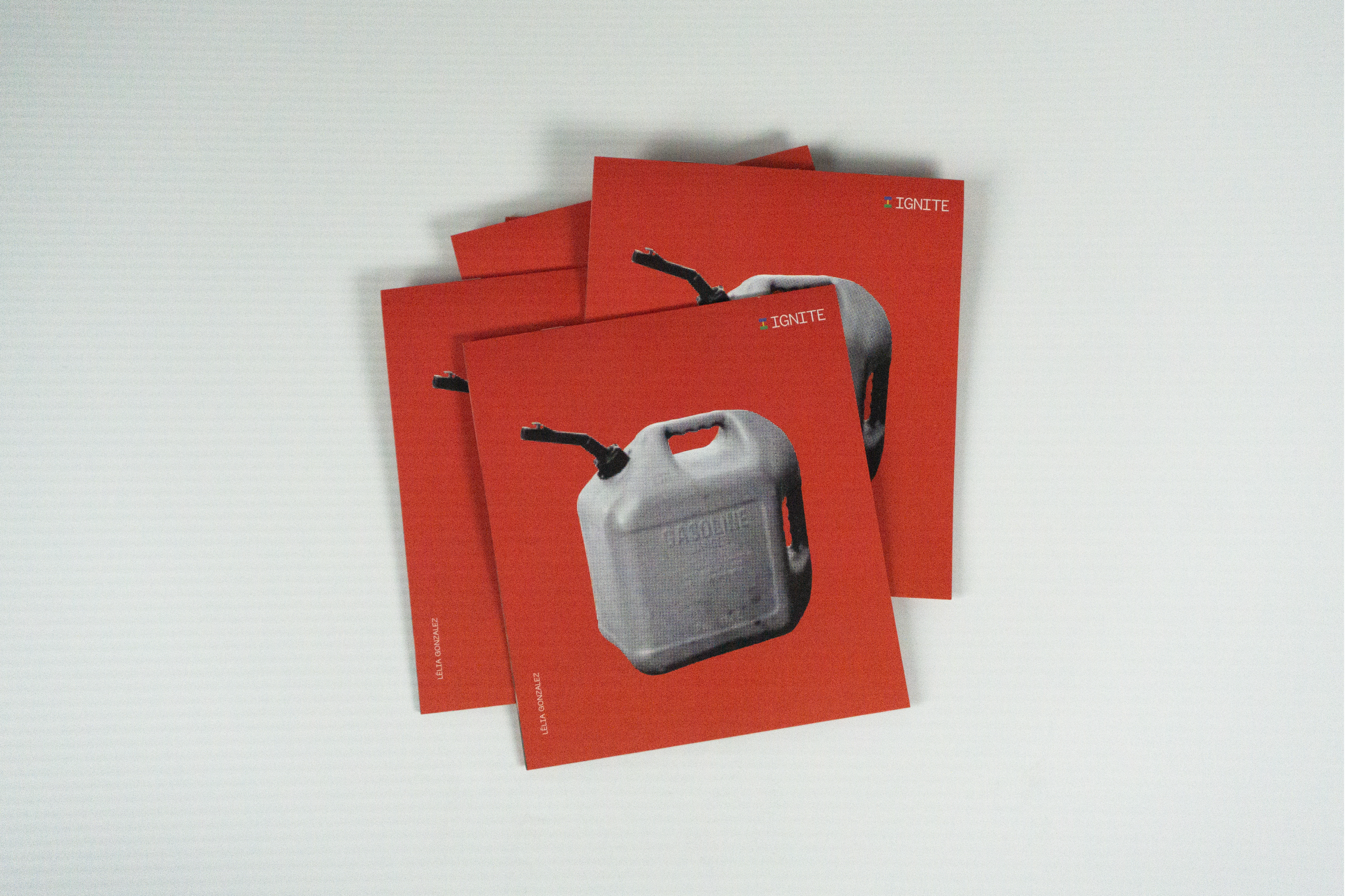
photo by Ingrid Nazzari
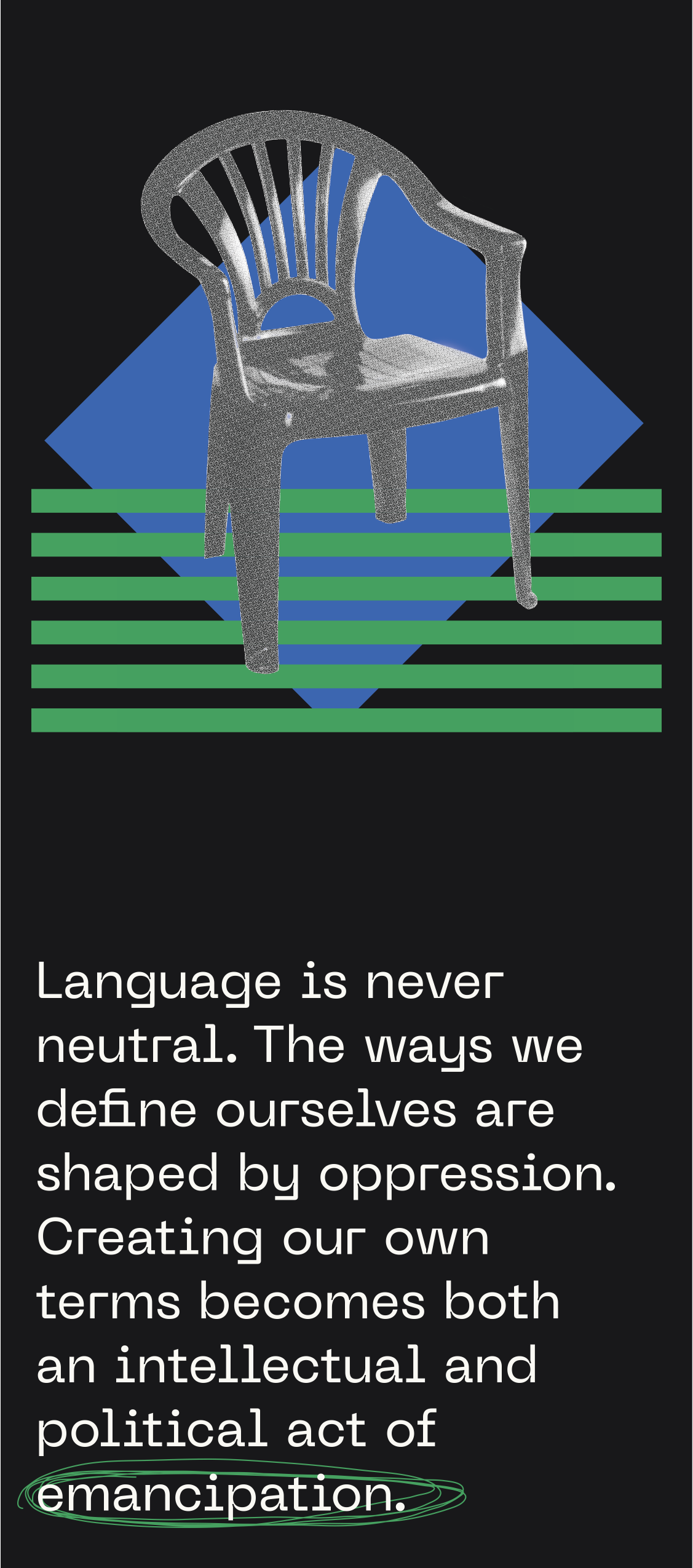
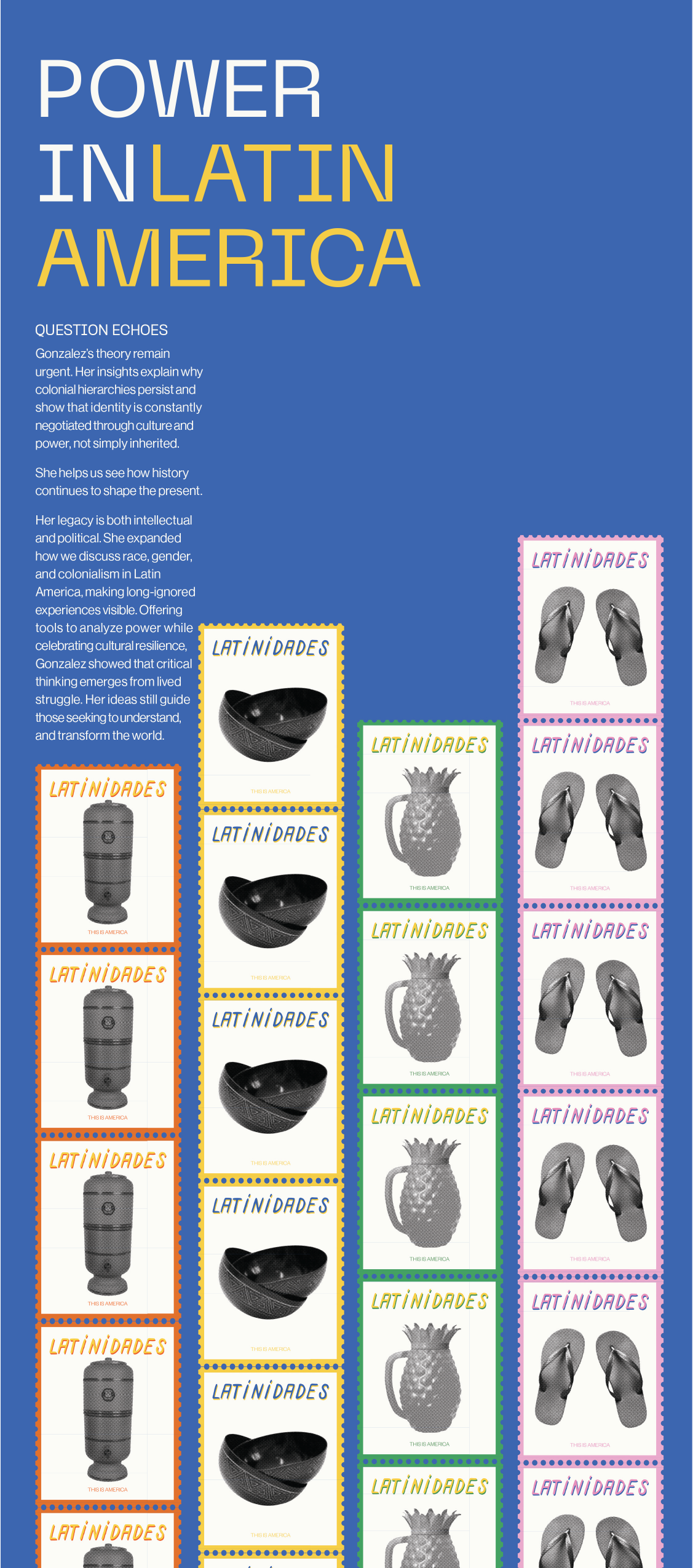
While producing the magazine, I felt that something was still missing. The magazine had started the conversation, exposed the wounds, and made a new reality visible. But so what? What do we do with all of this now? With that question in mind, I created the booklet as a companion publication that offers the reader a new perspective on themselves and their own community.
Decolonizing the way we see is not just about understanding the problem. It is also about having enough vocabulary to shape new ways of seeing. That is why, through the booklet, I wanted to introduce Latin American thinkers who speak from a decolonizing perspective. This way, the reader can not only understand the problem but also begin to find real, meaningful solutions.
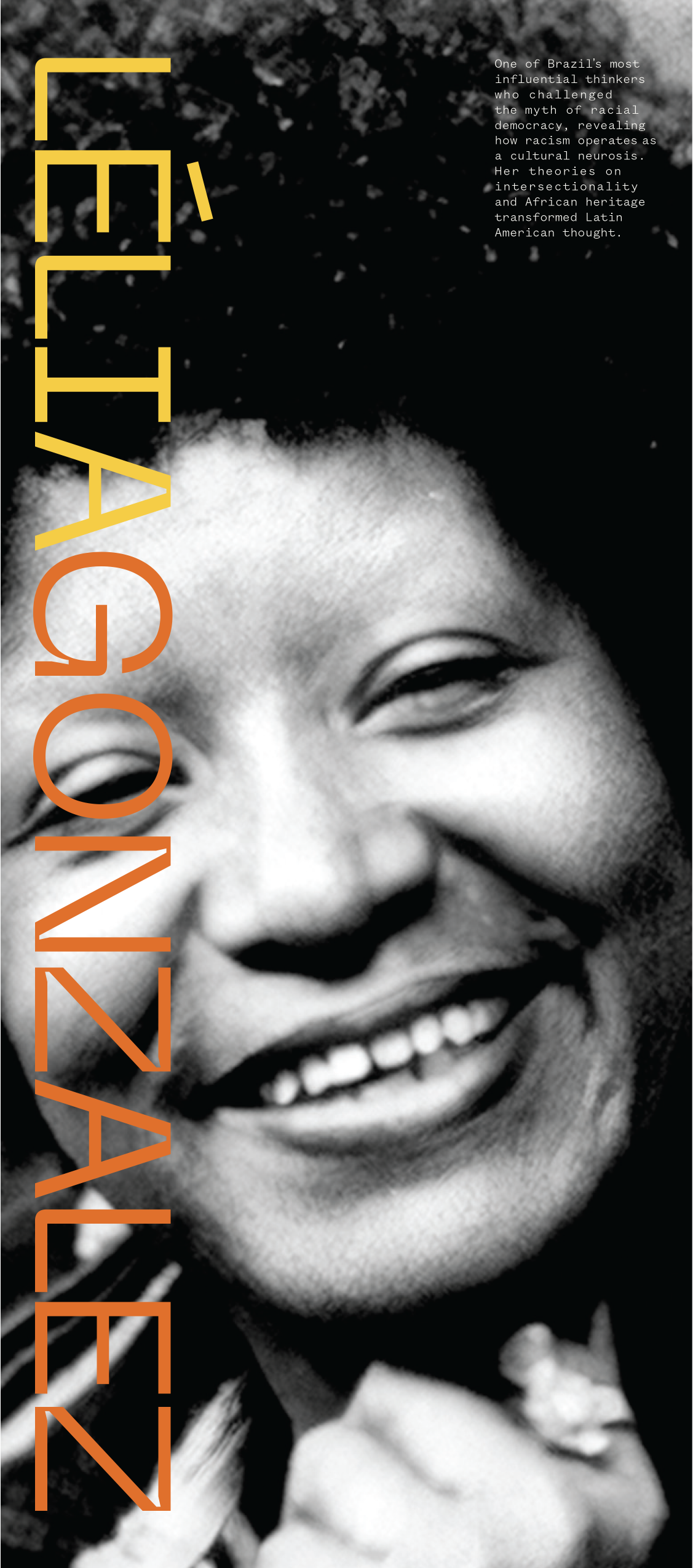
In issue number one, the booklet presents the story and thoughts of Lélia Gonzalez, a Brazilian writer, activist, and philosopher who addresses the colonialist heritage from the perspective of a Black Latina woman. Although she is widely known and referenced by people like Bell Hooks, Gonzalez remains largely unknown in Latin lands.
I decided to make the booklet a flipbook in portrait orientation. This format brings the idea that, with it, your view of things begins to shift. It stops being what is expected and starts becoming your own.
With the booklet, I wanted to reinforce that Latin American material and intellectual production exists and is well established. There is simply no better way to look at and understand our own experiences than through the words of writers who live the same reality, not as an outside observer analyzing an exotic habitat.
The booklet measures 7.5 x 8.5 inches, printed on uncoated paper and saddle stitched. I made these choices to keep the texture and paper weight close to the magazine, so both pieces feel like they belong together.
poster
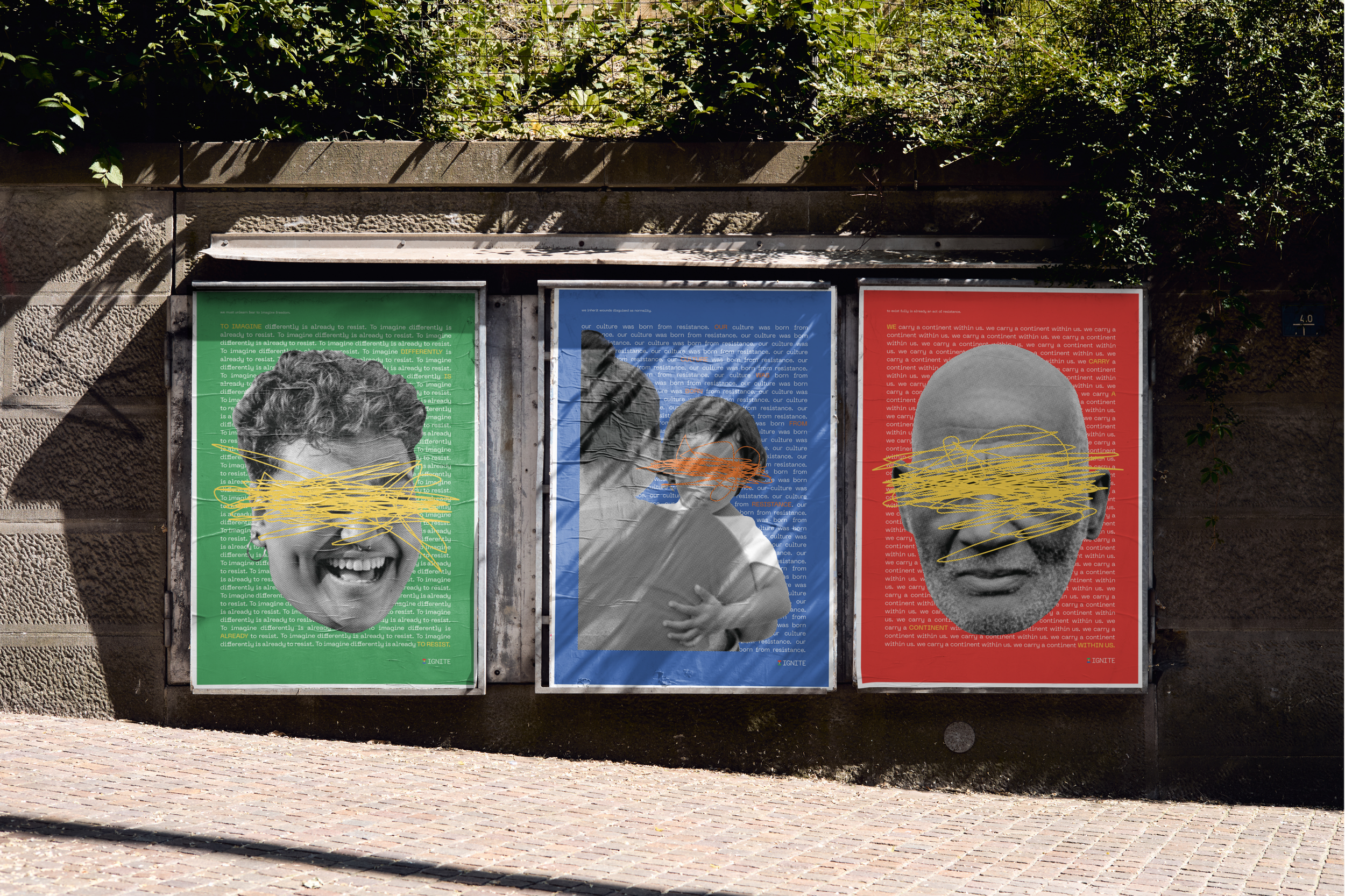
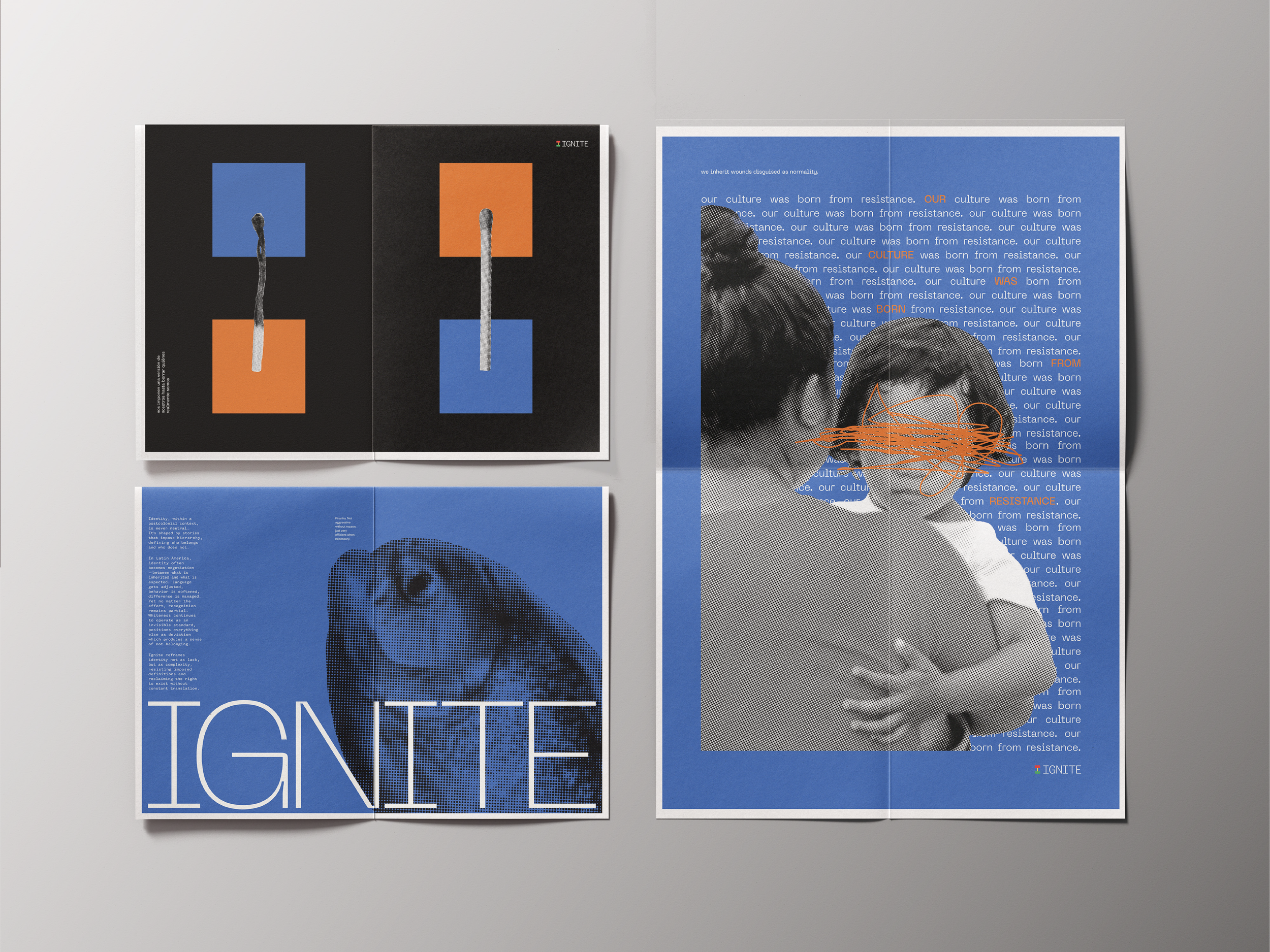
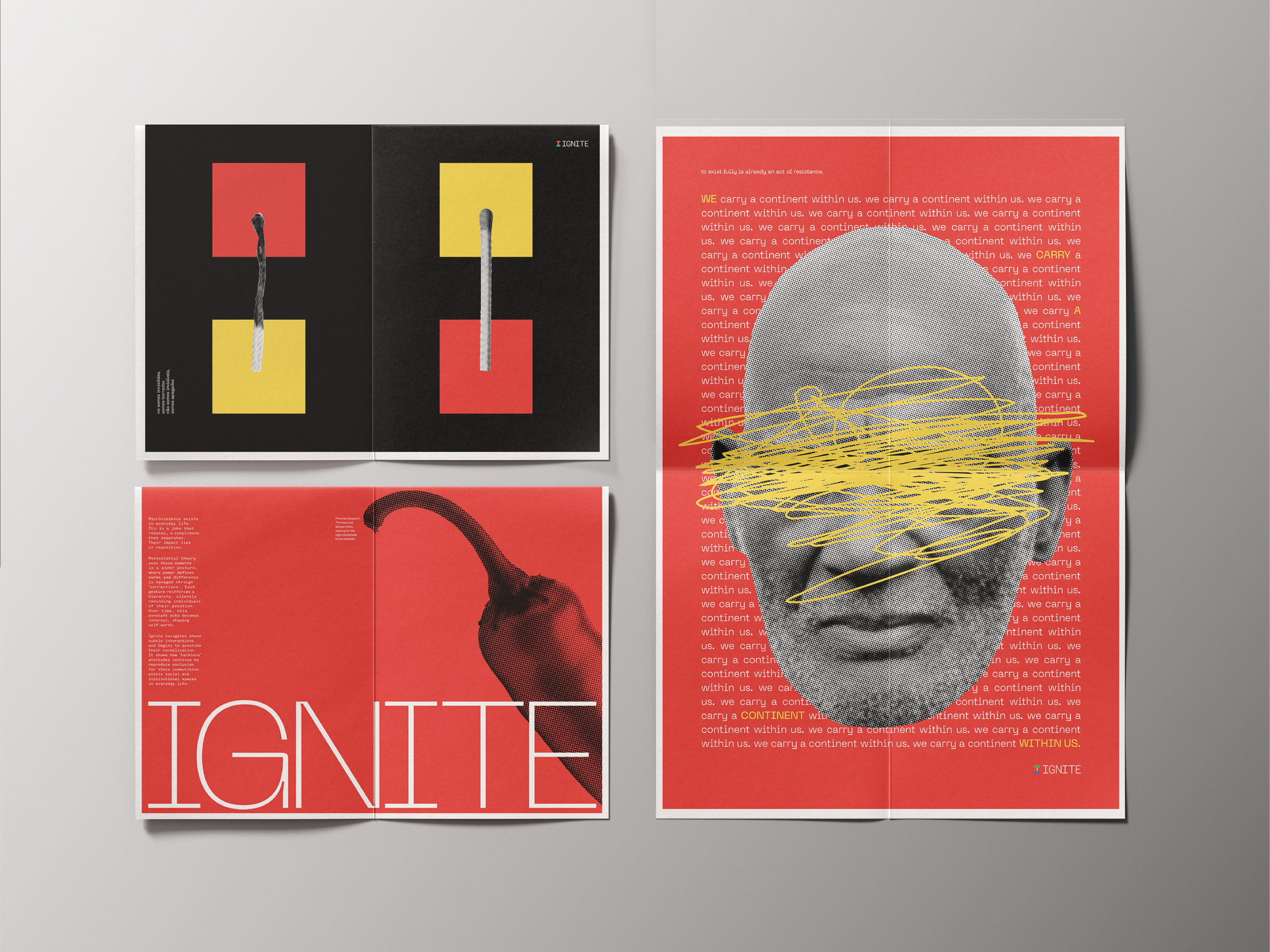
I knew that with the posters, I wanted to bring a sense of pride. A feeling that despite all the adversity and violence, we continue to exist and resist far beyond our territory. I wanted to convey strength, recognition, and impact, but it took some time for all the elements to finally click in my head.
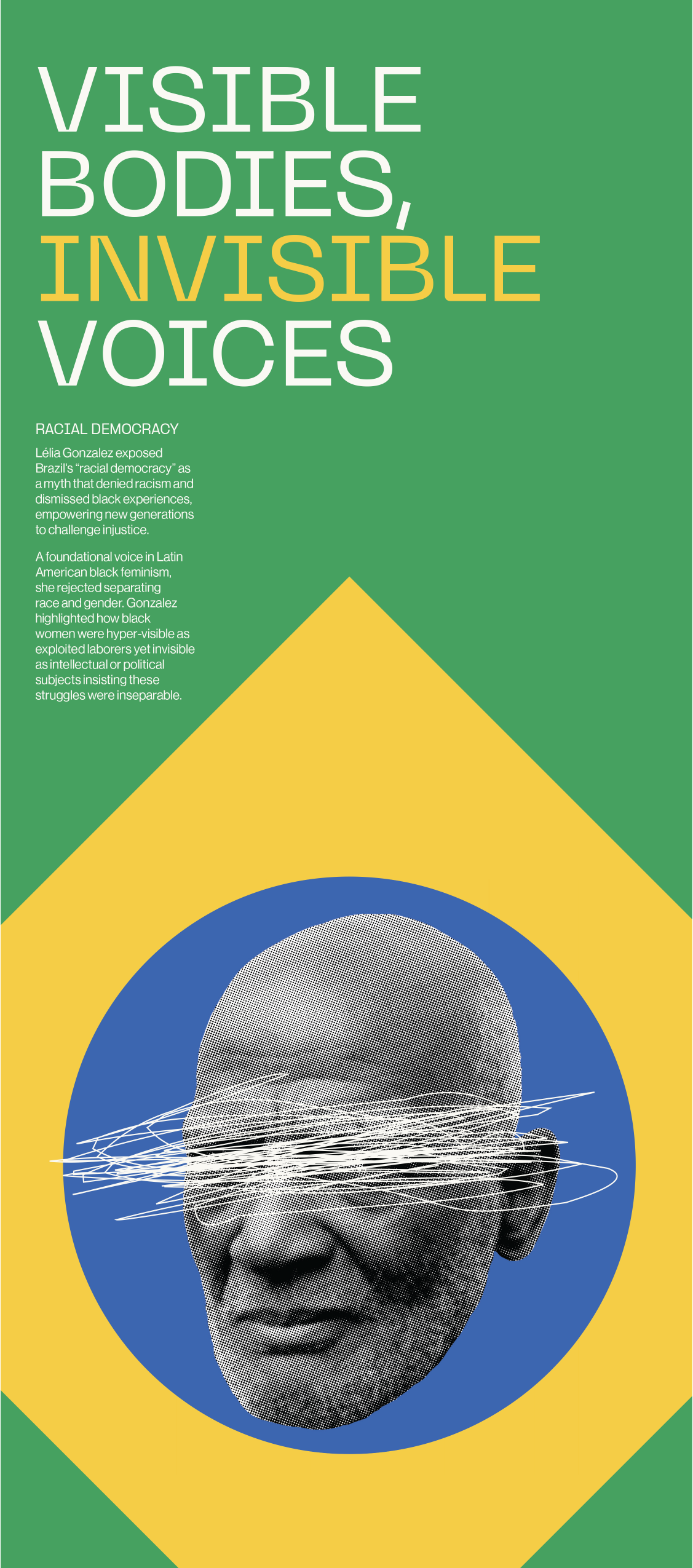
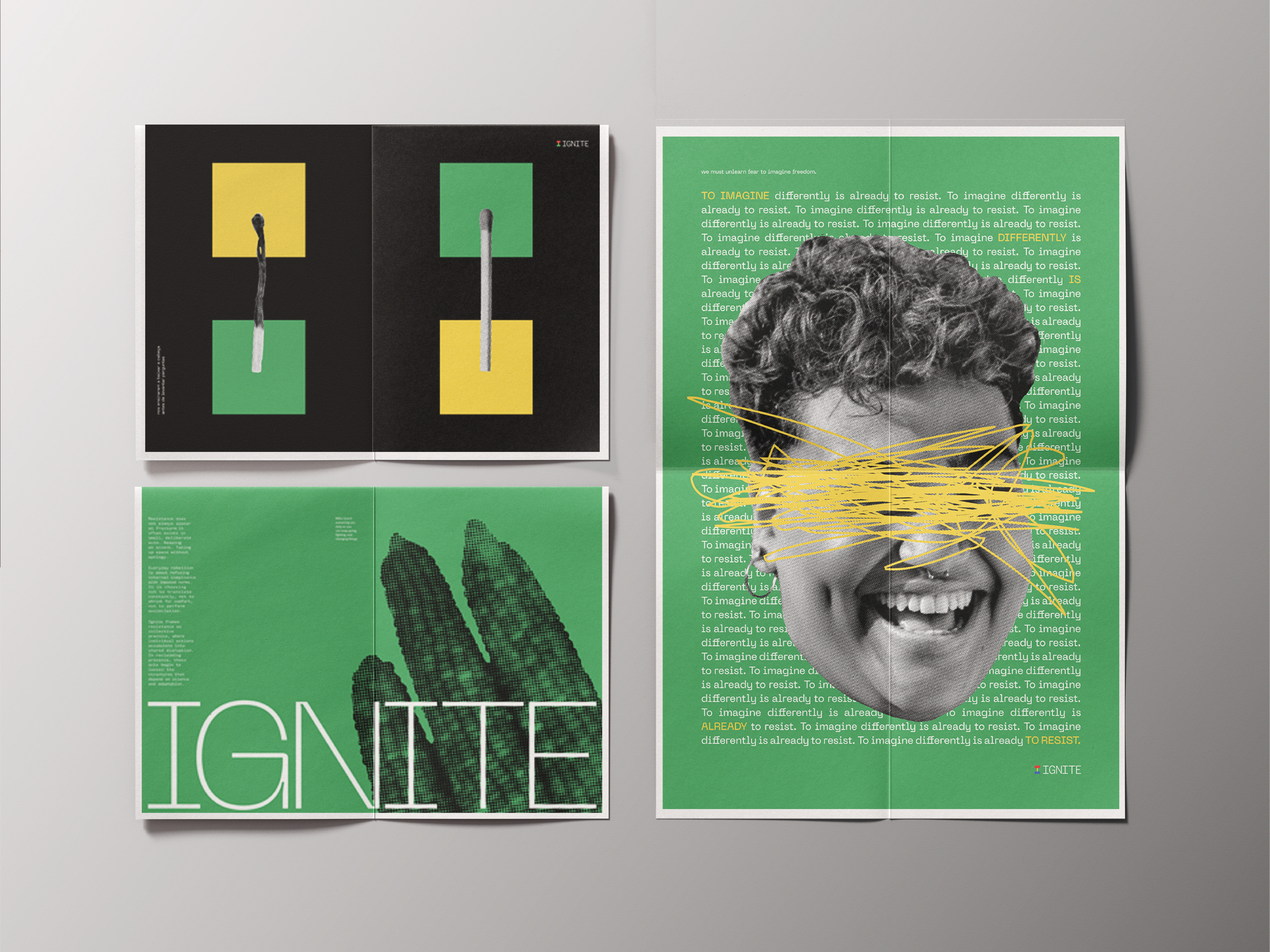
I produced three different posters. On each one, a marked face serves as a visual representation of the attempt to blind us to who we truly are. I added different statements to the images because I believe that image and word complement each other and bring even more power to the message.
All three posters are fold posters, which gave me the opportunity to create something like a mini version of the magazine, complete with a cover and pages. I used the pages to include and reinforce the IGNITE manifesto while also showcasing a Latino cultural element.
The posters measure 35 cm x 50 cm and are printed on newspaper stock, closing the IGNITE experience with the same raw, tactile material that connects all three pieces. Together, the magazine, the booklet, and the posters form a cohesive body of work that invites reflection, conversation, and reclamation of our narrative.
Everything
else
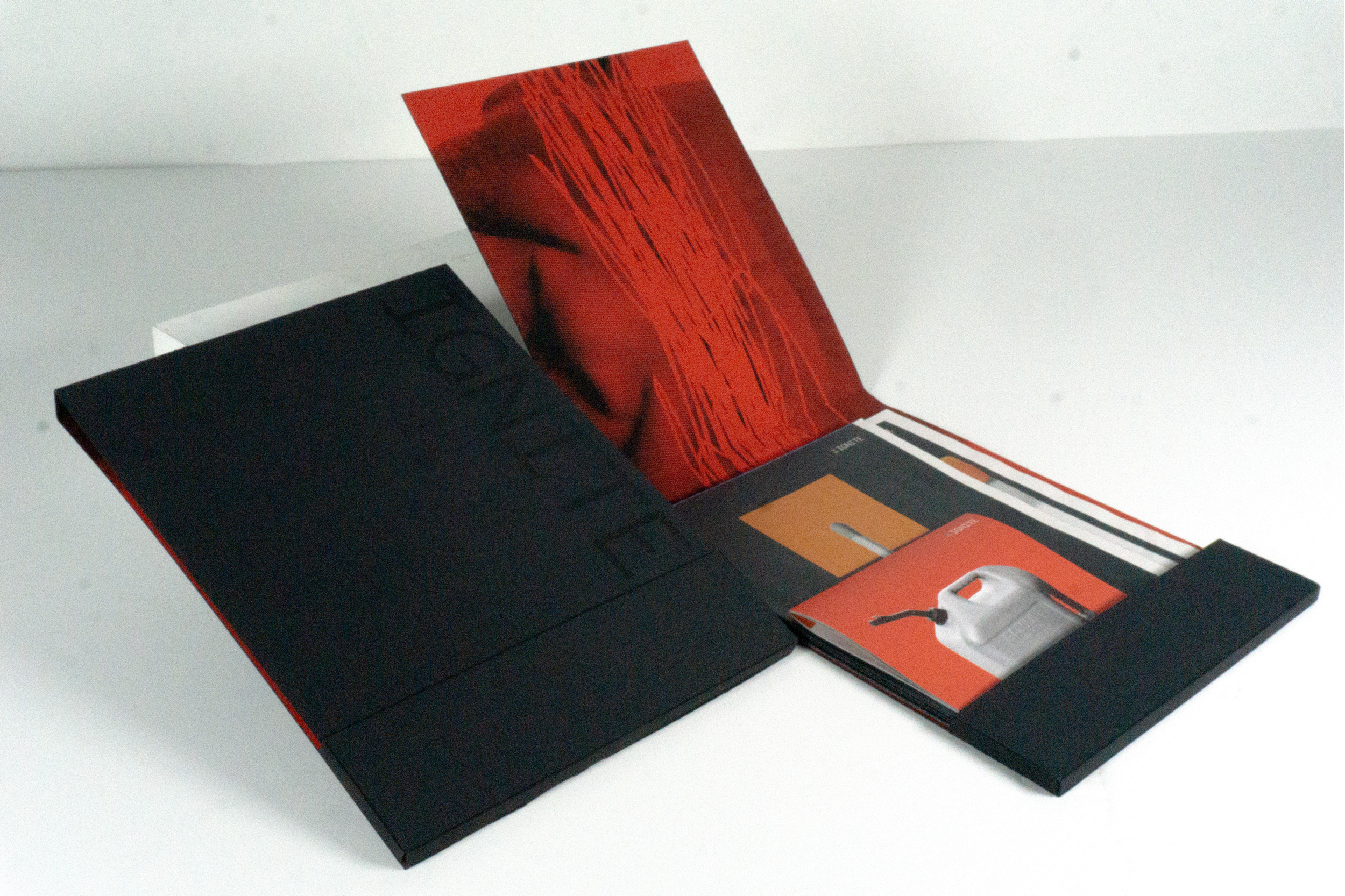
photo by Ingrid Nazzari
With the publications ready, I started thinking about how to present them in a package that would make sense for the entire project and add another layer of meaning. Since matches are used across all the publications as a symbol of transformation, metaphorically burning the old and establishing something new, I incorporated the matchbook as the packaging.
This was my first big adventure in producing a package. After many tests and practice runs, I was finally able to finish it. I created the packaging flat pattern from scratch, selected different papers that still maintained the texture that runs through the entire project, used laser cutting for the cuts and engraving, and did the final assembly.
As an extra material, I made mini booklets with a step by step guide on how to decolonize the way Latinos see themselves, how to respond to microaggressions, and how to be an ally if you are not part of the community. I also created a Latina playlist to reinforce and support Latin America cultural production with songs that align with the theme and show new perspectives.
To close it all out, I created some stickers and postcards as merchandise products.